Kino immer anders
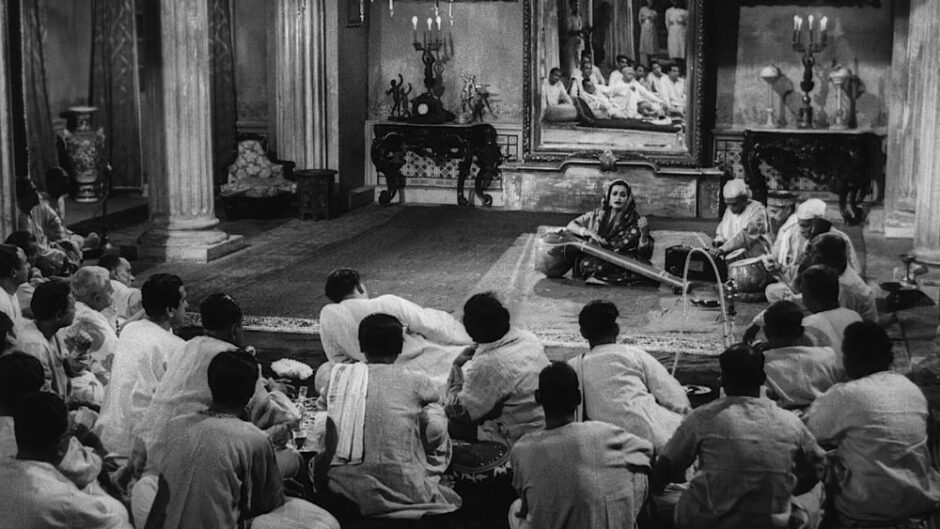
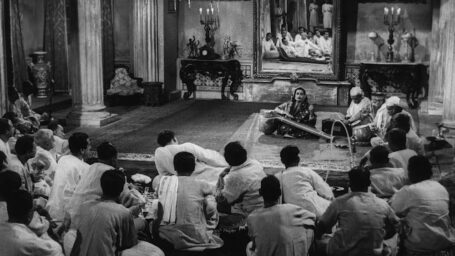
Set in early 20th-century Bengal, the film follows Biswambhar Roy, a declining landlord clinging to his aristocratic past. Despite financial ruin, Roy remains obsessed with music and dance, refusing to abandon the traditions of his status. Challenged by his wealthy neighbor’s new music room, Roy sells his wife’s jewels to host one last, grand Kathak performance. The evening is a triumph, briefly restoring his pride — only to mark his final, fleeting moment of glory.
The climactic Kathak performance by Roshan Kumari is nothing short of breathtaking. The film also brings together remarkable figures from Indian classical music: the legendary sitar player Vilayat Khan serves as music director, and the renowned singer Begum Akhtar appears in a rare vocal performance. Inside the music room, the gently swaying chandeliers and the large mirror behind the performers quietly reflect the landlord’s pride, vanity, and decline. Yet the film never feels confined to this room. Outside the mansion stretches a flood-ravaged landscape, captured in striking images, from an insect struggling in a glass to a white horse racing across the land, and an elephant standing in the distance. It is this sense of scale that defines Ray at his best, and his exceptional command of space is the very breath of cinema itself.
Takumi Tachibana