Kino immer anders
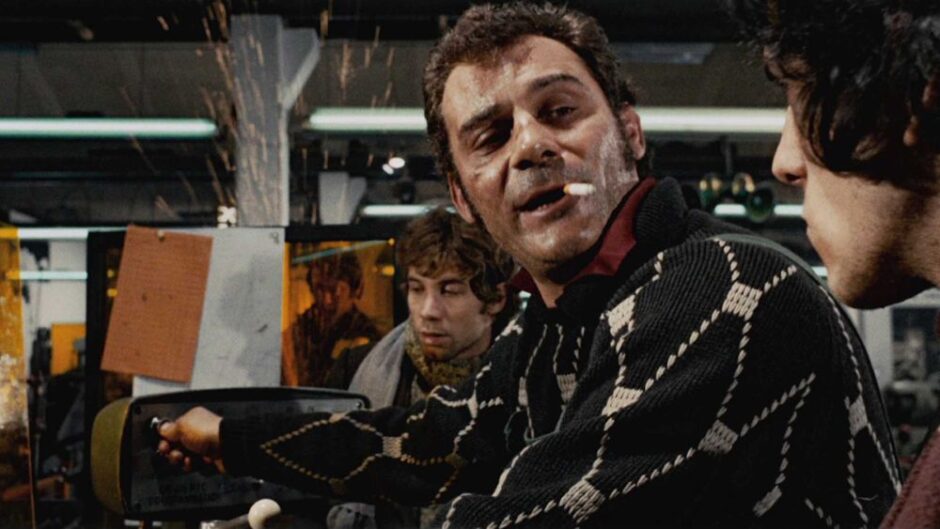
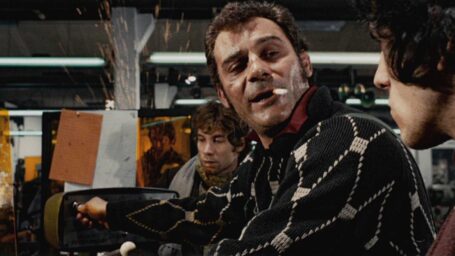
Lulú Massa is the most productive worker at a factory in northern Italy and embodies the contemporary image of the “mass worker.” To earn a little extra, the bosses like to assign him to various stations to reduce production times, and thus the quota-based pay of the rest of the workforce. But everything changes when Lulú loses his finger in a workplace accident. Suddenly, he finds himself caught between the opinions of the students protesting outside the factory gates, unions, his bosses, and his own desires, with no clear direction.
Elio Petri delivers what is arguably the most pessimistic of his political thrillers. Filmed on an occupied factory site, the film highlights the contradictions of modern working-class life. Amid work at top speed, constant flow of information, pressure to consume, and chauvinism, the inimitable Gian Maria Volonté delivers a compelling performance of extremes. One of the essential films of the post-Prague Spring fragmented and disillusioned leftist European cinema scene, the premiere of La classe operaia va in paradiso sparked controversy: on the one hand, it won the Grand Prix at Cannes; on the other, prominent figures even called for the negative to be burned.
Leonidas Skopeteas