Kino immer anders
Ticket link: Riffraff Zurich
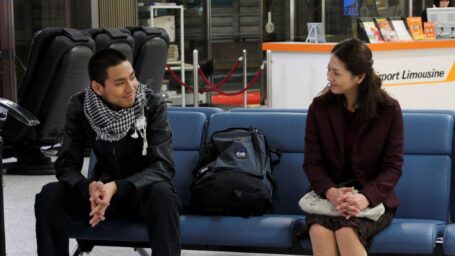
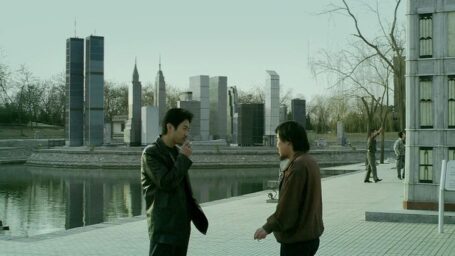
What’s a scarier thought: waking up everyday to a never-changing routine, everyone playing their role, or having said routine ruptured by way of the man, husband, father, and salaryman losing his job? When Tokyo Sonata’s patriarch Ryuhei Sasaki leaves the office for good one day, his involuntary quiet quitting sends the Sasaki family of four spiraling out of control – for better or for worse. In this foray into drama, horror director Kiyoshi Kurosawa imagines what lurks behind job loss in a country where the tradition of the male breadwinner model reigns supreme.
Kurosawa’s world is defined by an uncertainty and distance that are mirrored in the palette of desaturated colors and in the camera’s positioning. This posture of absence permeates Japanese society in its entirety: one is interchangeable with the next, and your subaltern existence can easily be replaced by someone else’s. The loneliness of this individualistic system, especially in megacities like Tokyo, takes its cue from J-horror, a genre the director helped pioneer with works as significant as Cure and Pulse. What prevails is the incapacity to react in the face of something larger than oneself, and the result is the protagonists’ inert movements, shuffling along “in line”, driven by the randomness of a family’s desperation. Kurosawa delivers one of the finest representations of the Japanese labor and social system of the century.
Shuting Ling & Pietro Grisanti