Kino immer anders
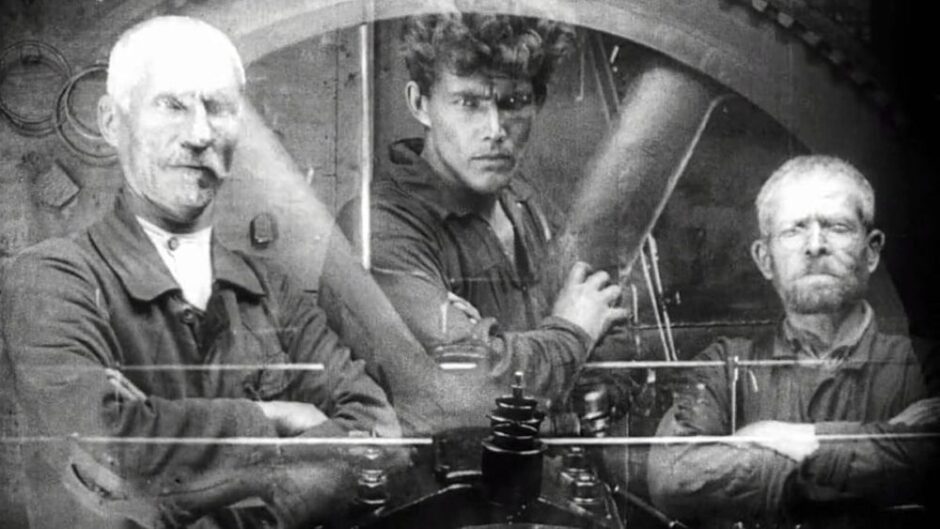
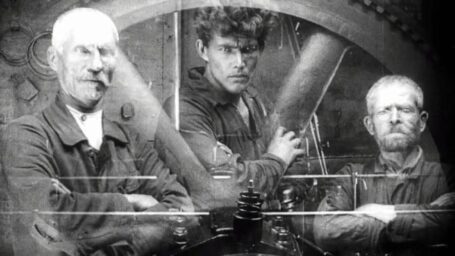
At a locomotive factory in Tsarist Russia, workers are just as interchangeable as the machinery they operate, while constantly surveilled by informants, squeezed by quotas, and held in contempt by their bosses. When a colleague is unjustly accused of stealing tools and hangs himself in despair, the factory floor erupts. What follows is an anatomy of collective action, a study of revolution and its internal contradictions: be that the slow infiltration of provocateurs, the attrition of hunger and domestic pressure, and finally a military crackdown of staggering brutality.
Twenty-six and fresh from the Proletcult Theatre, Eisenstein channels his theatre of attractions directly into the film medium, deploying superimpositions, radical camera angles and dialectical montage to assault the viewer’s senses rather than merely narrate. The film’s notorious finale intercuts the Cossack massacre of the strikers with footage of a bull being slaughtered, one of early cinema’s most famous and defining montages. Originally conceived as part of an unfinished seven-film cycle called Toward the Dictatorship of the Proletariat, the film’s workers defeat carries, watched today after the collapse of the Soviet Union, a historical weight Eisenstein could not have intended.
Tonino Huser